Reviewed August 6, 2026

How AI image labels work across social platforms

What viewers may see, which signals platforms may consider, and what a metadata cleaner can—and cannot—change before you publish.

  • Instagram
  • Facebook
  • Threads
  • LinkedIn
  • TikTok
  • YouTube / Shorts
  • Pinterest
  • Snapchat
  • X

Start with the model

One image can carry three different kinds of clues.

Removing embedded information solves a real privacy and file-hygiene problem. It does not erase every other way a platform can understand the content.

  1. 01

    Embedded file information

    EXIF, GPS, XMP, IPTC, app fields and C2PA/JUMBF containers can travel inside an image file.

    The cleaner can inspect and remove supported data in this layer.

  2. 02

    Visible or durable pixel signals

    A visible mark or an invisible watermark can be tied to the pixels rather than ordinary metadata.

    Re-encoding a file does not promise to remove these signals.

  3. 03

    Platform and creator context

    Disclosure answers, classifiers, the creation tool, account context and policy reviews can all matter.

    These decisions happen outside this browser-based cleaner.

A note about C2PA: this tool detects known marker/container presence and removes supported embedded data during re-encoding. It does not cryptographically validate a Content Credential.

Platform labels at a glance

These are the current public terms documented by the platforms. Placement, availability and policy can change by region, feature and content type.

  • InstagramFacebookThreads

    AI info

    Meta says the notice can appear on generated content. For content detected as only edited with AI, it may be placed in the post menu.

    Read details
  • LinkedIn

    Content Credentials indicator

    A small credentials icon can appear with an image or video. Opening it reveals the provenance details that are available.

    Read details
  • TikTok

    Creator labeled as AI-generated or AI-generated

    TikTok documents creator-applied and automatic labels shown directly on a post.

    Read details
  • YouTubeShorts

    Made with AI

    YouTube says the prominent notice appears below a long-form player or over a Short. Less realistic or lightly altered content may be disclosed in the expanded description.

    Read details
  • Pinterest

    AI modified

    Pinterest documents the label at the bottom-left of an image Pin in close-up. Ad disclosures can appear with other ad details instead.

    Read details
  • Snapchat

    Feature-specific sparkle, context card or visible watermark

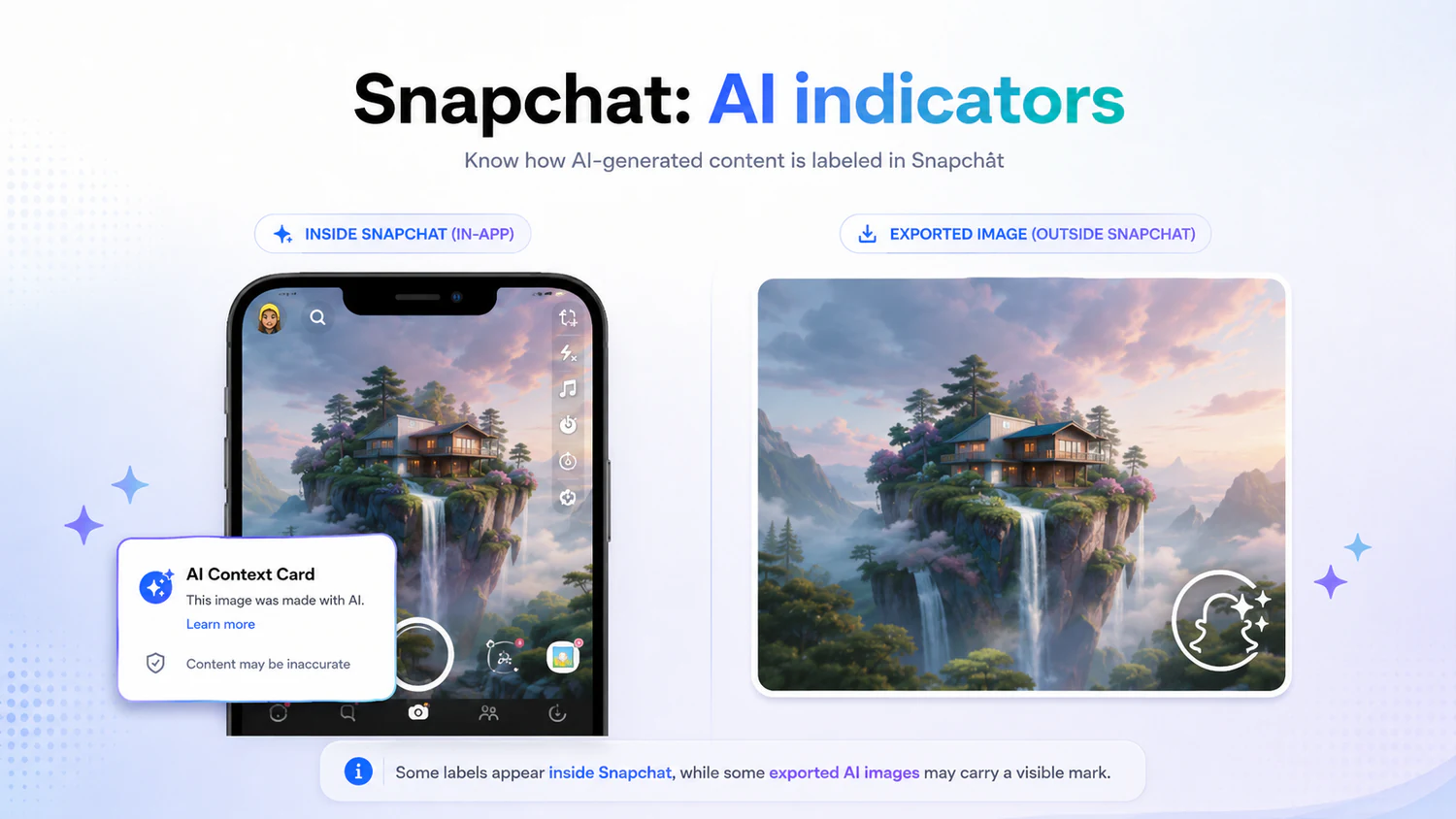
    Snap documents indicators for some content made with its own generative features, including in-app context and a visible Snap Ghost watermark on some saved images.

    Read details
  • X

    EU Made with AI indicators or context-dependent Manipulated media notices

    X documents Made with AI indicators in its EU plan and a Manipulated media notice on posts that meet its harmful, deceptive-media criteria.

    Read details

Platform by platform

What people may see—and what can trigger it

The illustrations below are explanatory mockups, not live platform screens. Use the linked official sources for the current rule and interface.

InstagramFacebookThreads

01 · Current public cue

Instagram, Facebook & Threads

AI info

Where it may appear
Meta says the notice can appear on generated content. For content detected as only edited with AI, it may be placed in the post menu.
Why it may appear
A creator disclosure or supported technical signals, including Content Credentials, may contribute. Meta also describes using other detection technology.
What this tool can change
A clean copy can remove supported C2PA/JUMBF, EXIF, XMP and IPTC information carried inside the downloaded image file.
What it cannot control
It cannot change a creator disclosure, Meta's own analysis, durable pixel signals or a label already attached to a published post.
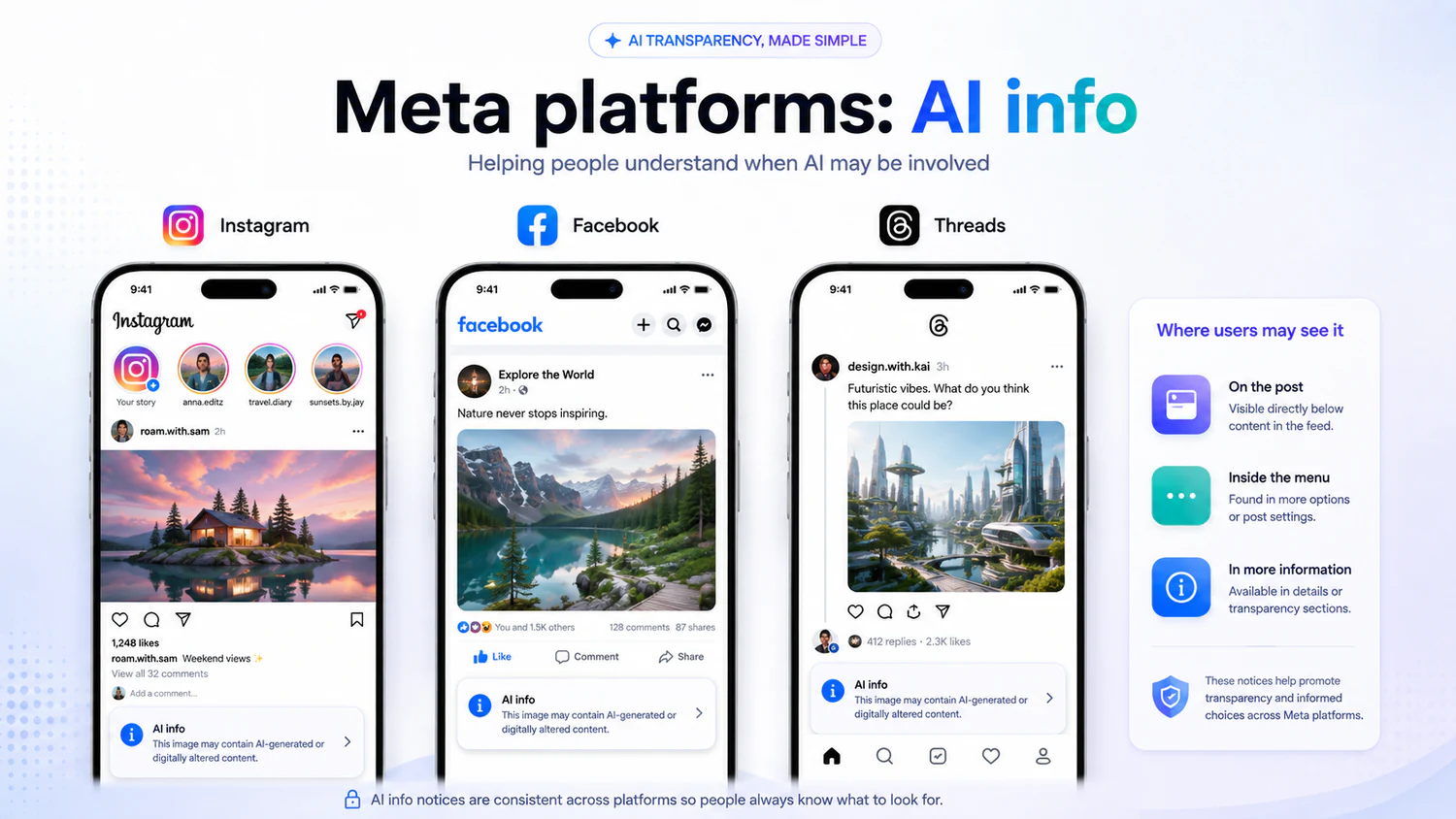
Illustrative Instagram, Facebook and Threads posts showing where an AI info notice may appear.
Illustrative interface. Wording, placement and availability can change; open the image for a larger view and consult the official source.
LinkedIn

02 · Current public cue

LinkedIn

Content Credentials indicator

Where it may appear
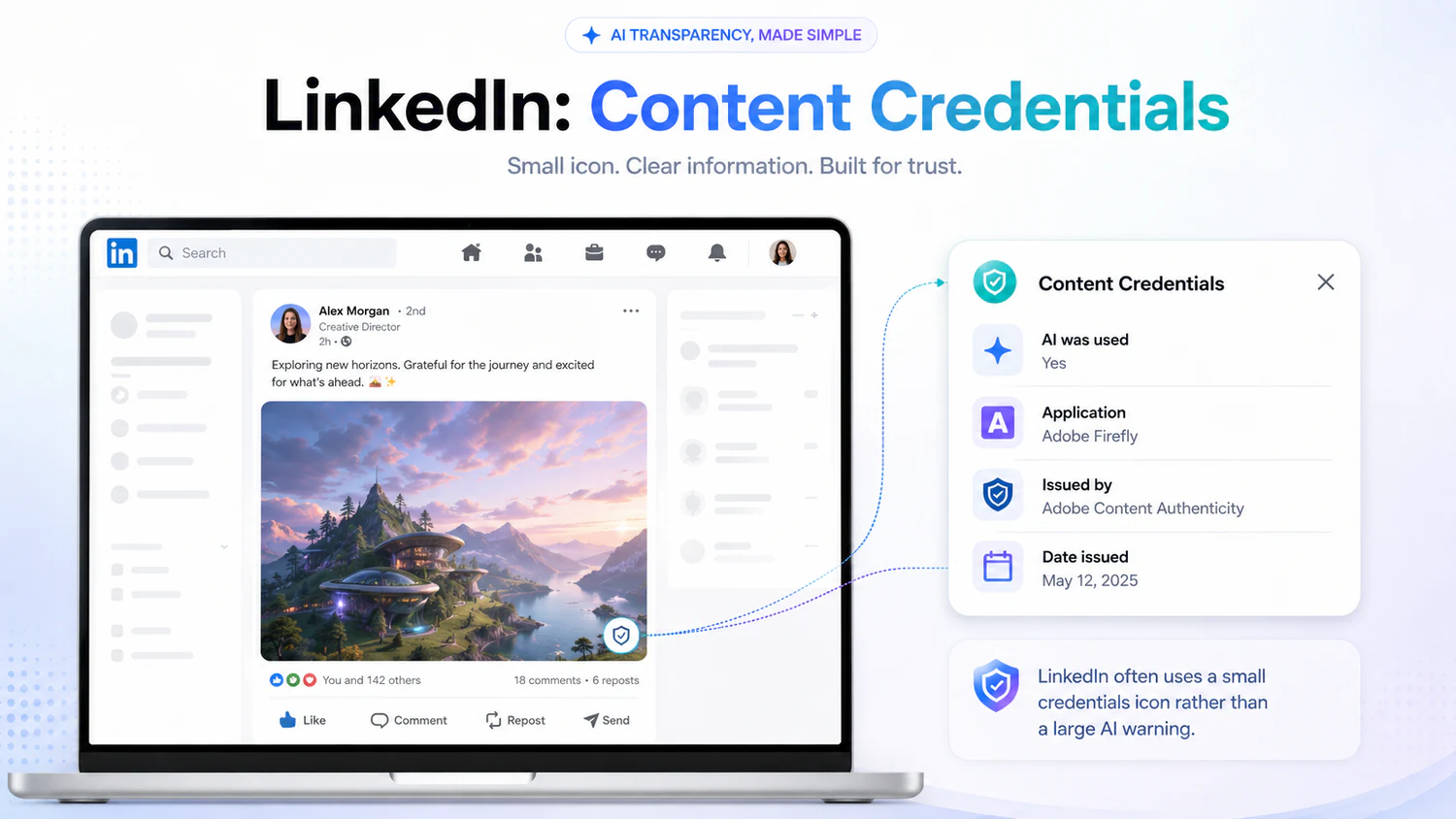
A small credentials icon can appear with an image or video. Opening it reveals the provenance details that are available.
Why it may appear
LinkedIn reads cryptographically signed C2PA Content Credentials attached to supported media. Those details can identify an app, device, issuer or an assertion about AI use.
What this tool can change
Re-encoding can remove supported credentials and other embedded fields from the new copy; the original remains unchanged.
What it cannot control
The scanner reports known credential markers but does not validate their signatures. A credentials badge describes provenance and is not always an AI verdict.
Illustrative LinkedIn post with a Content Credentials icon opening provenance details.
Illustrative interface. Wording, placement and availability can change; open the image for a larger view and consult the official source.
TikTok

03 · Current public cue

TikTok

Creator labeled as AI-generated or AI-generated

Where it may appear
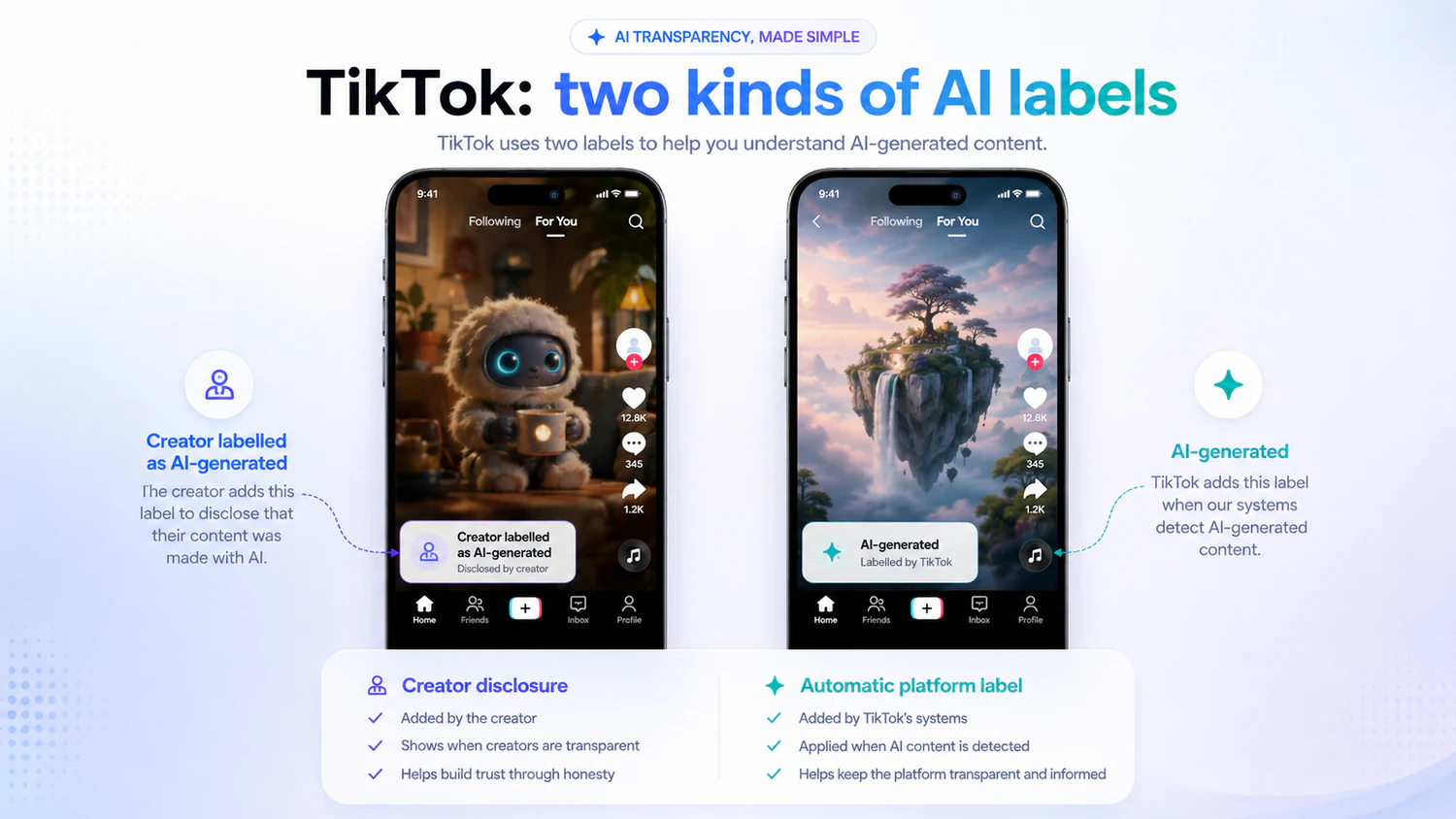
TikTok documents creator-applied and automatic labels shown directly on a post.
Why it may appear
Signals can include a creator's disclosure, TikTok AI tools, Content Credentials and TikTok's detection models.
What this tool can change
The cleaner can remove supported information embedded in a downloaded image before it is uploaded.
What it cannot control
It cannot change a disclosure requirement, labels from TikTok tools, detection models or durable watermarks. TikTok says automatic labels cannot be removed from a post.
Illustrative comparison of a creator-applied disclosure and a platform-applied AI-generated label on TikTok.
Illustrative interface. Wording, placement and availability can change; open the image for a larger view and consult the official source.
YouTubeShorts

04 · Current public cue

YouTube & Shorts

Made with AI

Where it may appear
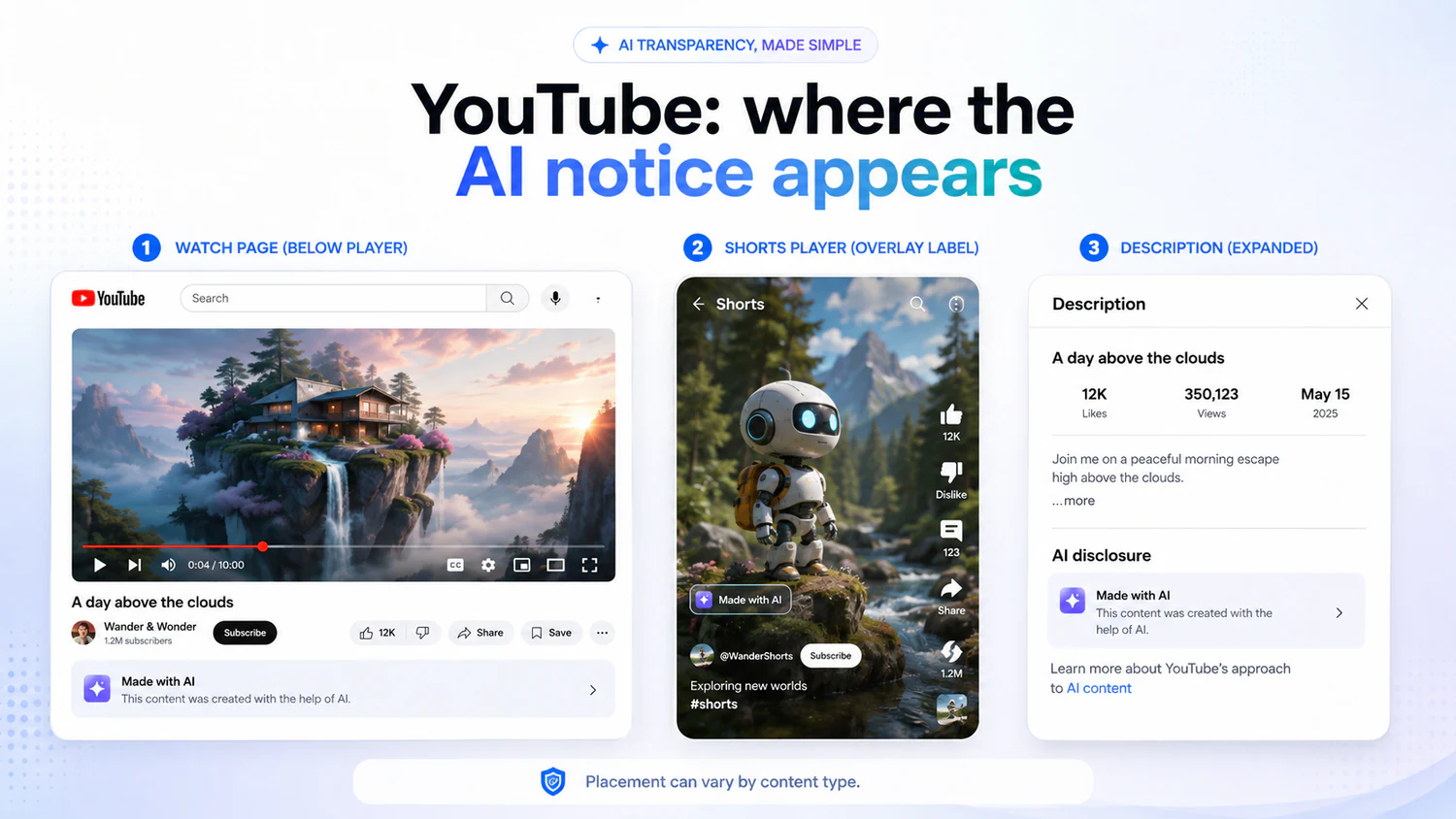
YouTube says the prominent notice appears below a long-form player or over a Short. Less realistic or lightly altered content may be disclosed in the expanded description.
Why it may appear
A creator disclosure, YouTube generation tools, qualifying C2PA information, internal signals or a manual review may contribute.
What this tool can change
Supported embedded metadata can be removed from a new image copy before it is used in a video or Short.
What it cannot control
It does not alter video disclosures, YouTube-generated labels, internal review or required creator answers.
Illustrative AI disclosures below a YouTube video, over a Short and in an expanded description.
Illustrative interface. Wording, placement and availability can change; open the image for a larger view and consult the official source.
Pinterest

05 · Current public cue

Pinterest

AI modified

Where it may appear
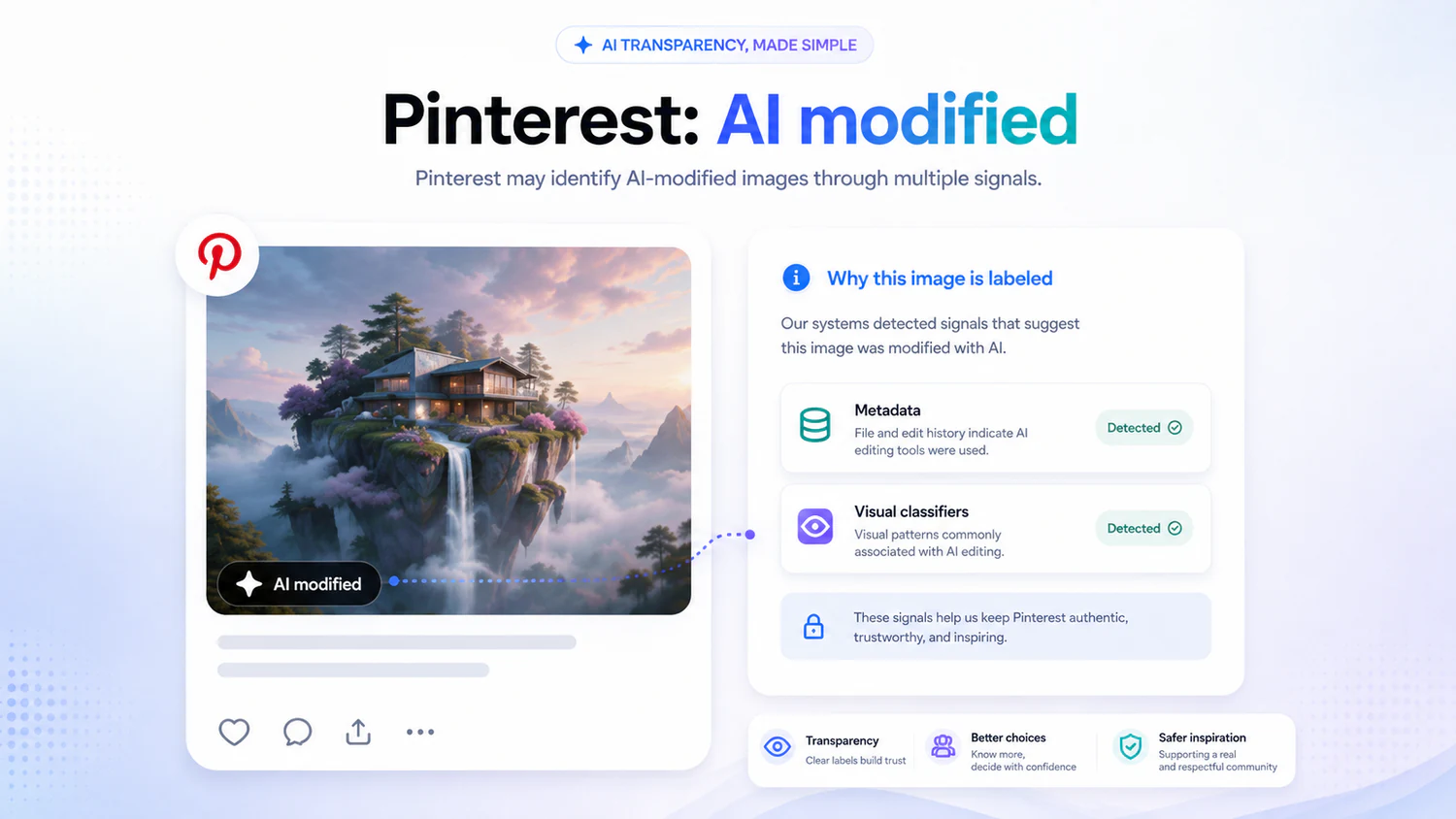
Pinterest documents the label at the bottom-left of an image Pin in close-up. Ad disclosures can appear with other ad details instead.
Why it may appear
Pinterest says it may use image metadata, content-owner disclosure and its own generative-AI classifiers.
What this tool can change
The cleaner can remove supported EXIF, IPTC, XMP and AI-related information embedded in the file copy.
What it cannot control
It cannot control Pinterest's classifiers or an owner disclosure. Pinterest notes that classifiers can be wrong and offers an appeal process.
Illustrative Pinterest Pin with an AI modified label and a conceptual diagram of metadata and classifier signals.
Illustrative interface. Wording, placement and availability can change; open the image for a larger view and consult the official source.
Snapchat

06 · Current public cue

Snapchat

Feature-specific sparkle, context card or visible watermark

Where it may appear
Snap documents indicators for some content made with its own generative features, including in-app context and a visible Snap Ghost watermark on some saved images.
Why it may appear
These indicators are tied to particular Snapchat AI features. Snap says not every AI-generated image receives the same treatment.
What this tool can change
The cleaner can still remove supported embedded information from an image file you prepare for sharing.
What it cannot control
Snap does not document a universal external-file metadata label system. The tool does not remove visible watermarks, and Snap prohibits removing its visible AI watermark.
Illustrative Snapchat AI context card and an exported AI image with a visible sparkle watermark.
Illustrative interface. Wording, placement and availability can change; open the image for a larger view and consult the official source.
X

07 · Current public cue

X

EU Made with AI indicators or context-dependent Manipulated media notices

Where it may appear
X documents Made with AI indicators in its EU plan and a Manipulated media notice on posts that meet its harmful, deceptive-media criteria.
Why it may appear
X says it may use its own technology and third-party reports. It does not publish a universal C2PA/IPTC label mechanism for every AI image.
What this tool can change
A metadata-clean image copy can be prepared for X in the same way as any other destination.
What it cannot control
Label behavior is region- and context-dependent. The cleaner cannot control X's policy enforcement, reports, Community Notes or platform analysis.

Set the right expectation

What a clean result actually means

The exported copy has been re-scanned and supported embedded information was not found. That is a useful, verifiable file result—not a promise about a social feed.

It does mean

The cleaner did not find the supported metadata categories in the new copy.

It does not mean

Human origin, authenticity, absence of invisible watermarks, or a guaranteed platform outcome.

Scan your image
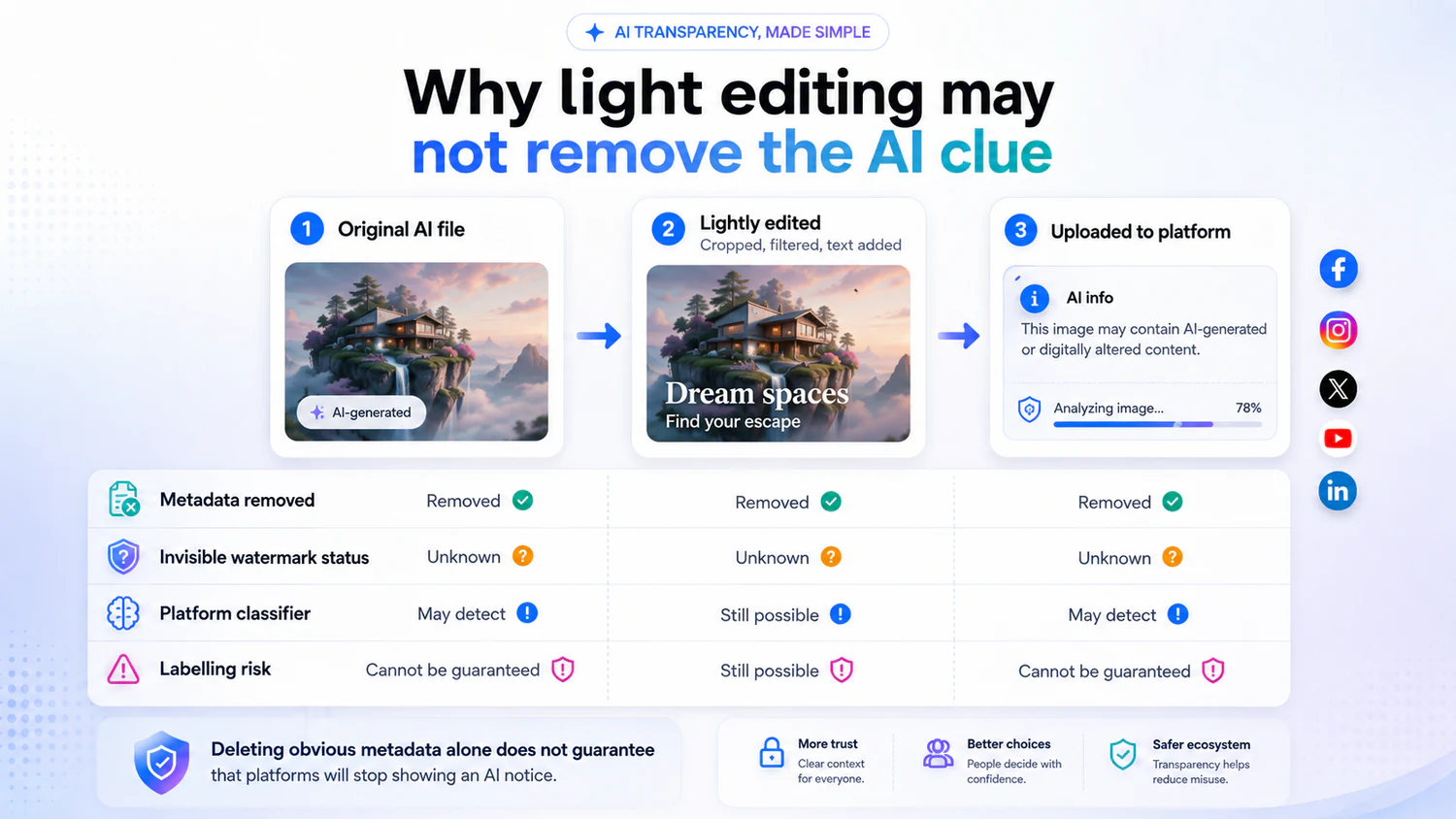
Diagram showing that removing embedded metadata does not remove invisible watermarks or prevent platform-side classification.
Conceptual illustration: the status of durable watermarks and platform classifiers remains outside a metadata-only result.

Before you publish

Will removing metadata prevent an AI label?

It can remove one source of information from the new file, but it cannot guarantee a platform result. Platforms may use disclosures, durable watermarks, classifiers and other context.

Does the cleaner remove SynthID or other invisible watermarks?

No claim is made about pixel-level or durable watermark removal. The tool is designed for supported information embedded in the file structure.

Does a clean scan prove an image is human-created?

No. A clean scan means the supported embedded fields were not found in the exported copy. It does not prove origin, authenticity or truthfulness.

Do I still need to answer a platform's AI disclosure question?

Yes. Follow the platform's current rules and answer disclosure questions accurately. This tool does not replace creator disclosure obligations.